
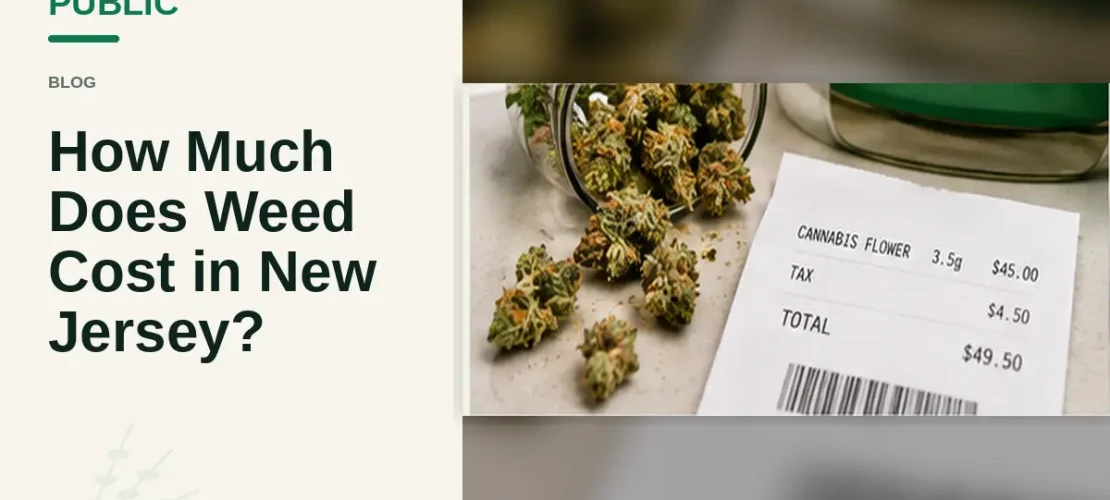
New Jersey’s adult-use market opened in April 2022, and prices in those early months were high by almost any standard. Limited supply, few licensed retailers, and a lot of demand.
Things have moderated considerably since. More cultivators, many more dispensaries, and real competition between them.
Prices still vary meaningfully by shop, by product tier, and by where in the state you are, so what follows is a working range rather than a price list.
Typical Flower Prices
Most menus are organized into rough tiers, and the gap between them is significant.
| Quantity | Value tier | Mid tier | Premium tier |
|---|---|---|---|
| 1 gram | $8–14 | $14–20 | $20–30 |
| Eighth (3.5g) | $25–35 | $35–50 | $50–70 |
| Quarter (7g) | $45–65 | $65–90 | $90–130 |
| Half (14g) | $85–120 | $120–160 | $160–220 |
| Ounce (28g) | $150–200 | $200–280 | $280–380 |
These are pre-tax figures and they move with promotions, which are frequent. The per-gram savings on larger quantities are real, though they flatten out at the top end, and it helps to know what each weight actually is before comparing. Worth weighing against how quickly you will actually finish it, since flower degrades over time and a stale ounce is not a bargain.
Other Categories
| Product | Typical range |
|---|---|
| Pre-roll (1g) | $10–18 |
| Infused pre-roll | $18–35 |
| Vape cartridge (0.5g) | $30–45 |
| Vape cartridge (1g) | $45–70 |
| Edibles (100mg package) | $20–35 |
| Live resin (1g) | $40–65 |
| Live rosin (1g) | $70–110 |
| Tincture (300–1000mg) | $35–75 |
The gap between live resin and live rosin is one of the larger price spreads on any menu, and it comes down entirely to the extraction method.
What Gets Added at the Register
The menu price is not the final number, and New Jersey’s structure has a few layers.
State sales tax applies to adult-use cannabis at New Jersey’s standard rate of 6.625%.
Local municipal transfer tax may be added by the municipality where the dispensary operates, up to 2%. Not every town levies it, which is one reason the same product can cost slightly different amounts across municipal lines.
Social Equity Excise Fee. This is applied at the cultivation level rather than at retail, so you will not see it itemized on your receipt — but it is built into the price you are paying. The rate has been adjusted by the Cannabis Regulatory Commission more than once since the market opened.
A practical rule: expect roughly 8 to 9 percent on top of the menu price at checkout in most of the state. Confirm the current rates, since both the local tax and the excise fee are subject to change.
Medical patients registered in New Jersey’s program are exempt from sales tax on cannabis, which is a meaningful ongoing difference for regular purchasers.
Why Prices Vary Between Shops
A few structural reasons, beyond ordinary competition.
Municipal tax differences account for a couple of percentage points. Location costs vary — a dispensary in a high-rent area prices accordingly. Vertically integrated operators who grow their own product have different economics from retailers buying wholesale. And supply for a given cultivar fluctuates, which moves prices for that specific product.
Delivery, where available, usually adds a fee on top.
Getting Better Value
Some straightforward levers.
- Shop the mid tier rather than the top, where quality is often excellent and pricing is much friendlier
- Look at harvest dates, since older stock is frequently discounted and may still be good
- Buy sizes you will actually finish while fresh
- Ask about first-time customer, daily, and loyalty pricing, which most shops run
- Compare price per gram rather than package price across sizes
That mid-tier point is the most useful one here. Potency percentage is a poor guide to enjoyment, and the products at the top of the price list are often there because of a number that predicts less than people assume — the argument we lay out in does higher THC mean a better high.
Asking directly about value is also completely normal and rarely done. It belongs on the short list of questions worth asking a budtender.
How This Compares to California
California generally runs cheaper on flower, with a mature cultivation sector and a lot of supply. Its tax structure is different and in some jurisdictions the total tax burden is higher than New Jersey’s, which narrows the gap at the register.
The rules differ too — purchase limits, delivery, and a few other practical details. We compare them in buying cannabis in New Jersey vs California.
A Note on These Figures
Cannabis pricing moves. Tax rates get revised, supply shifts, and promotions change weekly.
Treat the ranges above as a way to recognize whether something is priced reasonably rather than as a quote. The current menu is always the accurate answer, and anyone at Public can tell you what a given product comes to after tax before you commit to it.

About the Author: Alex Calleres
Alex Calleres has been operating multiple 20,000 square foot cannabis cultivation facilities for the past several years. Before cannabis, he worked in the oil refinery industry, and has done a lot of work on airport construction projects.
See more about the author