
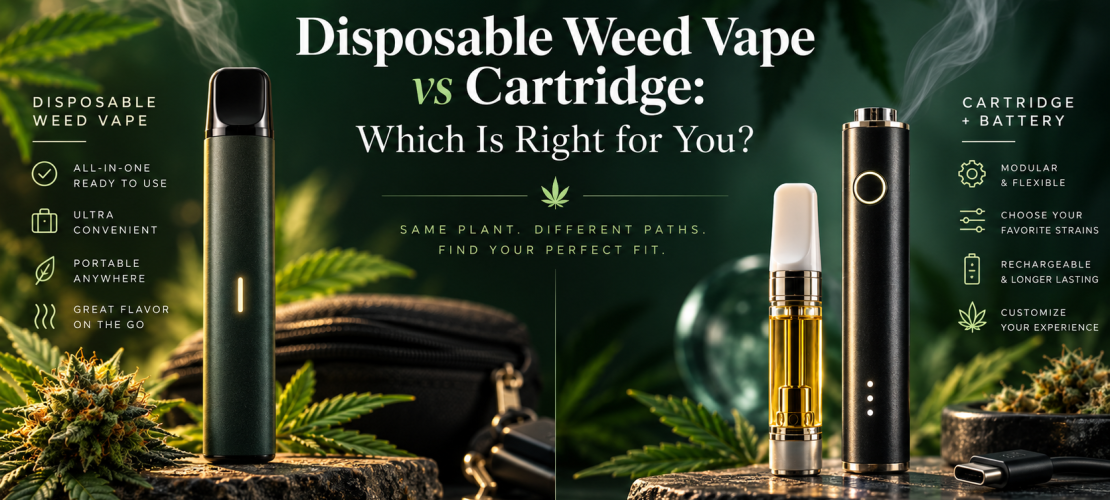
Understanding Your Vaping Options: A Complete Comparison
Walking into the cannabis vaping world presents you with two primary choices: disposable vapes and cartridges. While both deliver cannabinoids efficiently through vaporization, they differ significantly in cost structure, environmental impact, and user experience. Understanding these differences helps you choose the option that aligns with your consumption habits, budget, and lifestyle needs.
This guide breaks down everything you need to know about disposable weed vapes versus cartridges, from upfront costs to long-term value, ease of use to environmental considerations. Whether you’re new to cannabis vaping or looking to optimize your current setup, you’ll find the information you need to make an informed decision.
What Are Cannabis Vape Cartridges?
Cannabis vape cartridges, commonly called “carts,” are small tanks filled with cannabis oil designed to attach to a separate, reusable battery. Most cartridges use the industry-standard 510-thread connection, making them compatible with a wide range of battery devices. This modular design means you only replace the cartridge when it’s empty, while keeping and recharging the same battery for months or even years.
Cartridges typically hold 0.5mL to 1mL of cannabis oil and feature ceramic or quartz coils that heat the oil to create vapor. The oil inside can vary considerably in quality and type. You’ll find distillate-filled carts offering clean, potent vapor with THC concentrations ranging from 70-95%. Premium options include live resin cartridges that preserve more of the plant’s natural terpene profile, delivering fuller flavor and potentially more nuanced effects.
The construction quality matters significantly. High-grade cartridges use borosilicate glass tanks, ceramic wicks, and lead-free copper center posts. These materials prevent metal leaching and avoid the burnt taste that cheaper cotton wicks can produce. When properly maintained, a quality 510-thread battery can serve you through dozens of cartridge purchases.
What Are Disposable Cannabis Vapes?
Disposable cannabis vapes integrate everything into one compact unit: the battery, heating element, and pre-filled oil reservoir. They arrive ready to use straight from the package, requiring no setup, assembly, or separate purchases. Once the oil depletes or the battery dies, you discard the entire device and purchase a new one.
Modern disposables have evolved considerably from early models. Many now feature rechargeable batteries via USB-C ports, ensuring the battery lasts as long as the oil supply. They typically contain 0.5mL to 2mL of cannabis oil and offer similar potency levels to cartridges, with THC concentrations generally ranging from 70-90%.
The draw-activated mechanism makes disposables incredibly user-friendly. Simply inhale through the mouthpiece, and the device automatically heats the oil and produces vapor. No buttons to press, no settings to adjust, no voltage to optimize. This simplicity makes disposables the go-to choice for first-time vapers and those who prioritize convenience above all else.
Breaking Down the Cost Comparison
Understanding the true cost difference between cartridges and disposables requires looking beyond the initial purchase price. The economics shift dramatically depending on your consumption frequency and how you calculate long-term value.
Upfront Investment
Disposable vapes have a lower barrier to entry, typically costing $20-50 per device. You walk out of the dispensary with everything you need to start vaping immediately. Cartridges require purchasing both the cartridge itself ($15-40) and a compatible 510-thread battery ($15-25) if you don’t already own one. This means your initial cartridge purchase runs $30-65 total.
For someone trying cannabis vaping for the first time or using it only occasionally, that $20-30 difference in upfront cost makes disposables attractive. However, this cost advantage disappears quickly once you move beyond your first purchase.
Long-Term Value Analysis
The cost-per-milligram calculation reveals where cartridges shine. After your one-time battery purchase, each replacement cartridge costs $15-40. A typical 1mL cartridge at $20 delivers approximately 880mg of cannabinoids, working out to roughly $0.023 per milligram. A comparable 1mL disposable at $30 delivers the same cannabinoids at $0.034 per milligram—about 48% more expensive.
For daily users, these differences compound quickly. Someone using three cartridges monthly spends approximately $60 (after the initial battery cost), while three disposables would cost around $90. That’s a $30 monthly difference, or $360 annually. Even occasional users who consume one unit per month save $120 per year by switching to cartridges after the initial battery investment.
The quality 510-thread battery you purchase lasts 300-500 charge cycles before capacity degrades noticeably. For most users, that translates to 1-2 years of reliable service, supporting 20-50 cartridge purchases over its lifetime. The economic advantage of cartridges becomes undeniable once you factor in this battery longevity.
Convenience and Ease of Use
While cost matters, convenience often drives purchasing decisions, especially for new users still learning their preferences and routines.
The Disposable Advantage
Disposables eliminate every friction point in the vaping process. Remove the safety cap or protective sticker, inhale, and enjoy. No instruction manual needed, no compatibility concerns, no learning curve. The draw-activated mechanism responds instantly to your inhale, producing vapor without pressing buttons or holding down controls.
This plug-and-play simplicity makes disposables ideal for situations where convenience matters most: travel, concerts, outdoor activities, or anywhere you want hassle-free access. If you misplace or lose a disposable, you’re out $25-40, but you don’t need to worry about replacing both a battery and cartridge separately.
Cartridge Setup Requirements
Cartridges involve a bit more process. You’ll need to charge your 510-thread battery before first use, then carefully thread the cartridge onto the battery by screwing it clockwise. Most batteries activate with five quick clicks of the power button, and some offer preheat functions to warm thick oil and prevent clogging.
You’ll also need to monitor battery life and charge it every few days depending on usage frequency. However, this minor maintenance routine becomes second nature quickly, and the ability to swap cartridges in seconds lets you rotate between different strains or cannabinoid profiles throughout the day.
Performance and Customization Options
Beyond basic functionality, the two formats offer different levels of control over your vaping experience.
Temperature and Voltage Control
Variable-voltage batteries paired with cartridges give you precise control over vapor production and terpene preservation. Lower voltage settings (2.7-3.1 volts) produce smoother, more flavorful vapor by heating cannabis oil gently, preserving delicate terpenes that can degrade at higher temperatures. Higher voltage settings (3.3-3.8 volts) create denser vapor clouds and stronger hits, which some users prefer.
This temperature control matters more than many realize. Different cannabinoids and terpenes vaporize at different temperatures. By adjusting your battery voltage, you can emphasize certain compounds and customize effects beyond what the oil strain alone provides.
Disposables lock you into fixed power settings, typically running at 25-35 watts on auto-draw. While this delivers consistent performance, you can’t adjust if you find hits too harsh or too weak. The one-size-fits-all approach works for many users but limits customization for those who want to fine-tune their experience.
Coil Technology and Flavor Quality
High-quality cartridges use ceramic or quartz wicks paired with ceramic heating elements. These materials heat evenly, resist burning, and preserve the natural flavor profile of cannabis terpenes. Ceramic doesn’t impart any taste of its own, letting you experience the pure flavor of your chosen strain.
Disposables also use ceramic or cotton coils, but the coil quality and airflow design vary considerably by manufacturer. Premium disposables rival cartridge flavor, while budget options may deliver harsher vapor or muted terpene profiles. Since you can’t replace the heating element in a disposable, you’re stuck with whatever quality the manufacturer included.
Environmental Impact and Sustainability
The environmental footprint difference between these formats is substantial and worth considering if sustainability matters to you.
Waste Generation Comparison
Each disposable vape you finish adds a lithium battery, heating coil, wiring, plastic housing, and glass tank to the waste stream. Even though many components can technically be recycled, most end up in landfills because proper e-waste disposal requires specialized facilities that aren’t widely accessible.
Cartridges generate significantly less waste per session. You purchase one battery that serves you through 20-50 cartridge purchases. Each time you finish a cartridge, only the empty glass tank and small heating element need disposal—the battery continues serving. This reduces your e-waste footprint by approximately 70-80% compared to disposables.
Battery Lifecycle Considerations
A quality rechargeable 510-thread battery lasts 300-500 charge cycles before capacity drops noticeably. For daily users, that’s 1-2 years of reliable service. Compare this to disposables: ten disposables mean ten complete devices in the waste stream—ten batteries, ten heating elements, ten complete assemblies—versus one reusable battery and ten replacement cartridges.
Some states and municipalities are beginning to implement stricter e-waste regulations due to the environmental burden of single-use vaping devices. While regulations vary, the trend points toward increased responsibility for proper disposal and potential future restrictions on disposable formats.
Who Should Choose Cartridges?
Cartridges make the most sense for several user profiles. Daily or frequent users achieve the fastest return on their battery investment, often within the first month. The per-unit cost advantage compounds over time, making cartridges the economically smart choice for regular consumption.
Experienced vapers who appreciate customization will value the control that variable-voltage batteries provide. Being able to adjust temperature settings lets you optimize for flavor, vapor production, or throat feel based on the specific oil type and your preferences at any given moment.
Flavor enthusiasts particularly benefit from cartridges. Pairing a quality ceramic cartridge with a low-voltage battery setting preserves delicate terpenes better than the fixed, often higher-wattage approach of disposables. If you’re investing in premium live resin or rosin cartridges, you’ll want the control to showcase those terpenes properly.
Environmentally conscious consumers will appreciate generating 70-80% less e-waste per session. The reusable battery model significantly reduces your environmental footprint compared to single-use disposables.
Who Should Choose Disposables?
Disposables excel for beginners who want to try cannabis vaping without committing to additional purchases or learning device operation. The zero-friction experience removes all barriers between curiosity and first inhale. You can focus entirely on understanding how different strains and potencies affect you without worrying about device settings or maintenance.
Casual or occasional users who vape once or twice weekly may never consume enough to justify a battery purchase. If you’re buying one unit every month or two, the convenience premium of disposables doesn’t add up to significant annual costs, and you avoid the battery investment entirely.
Travelers and on-the-go users benefit from the all-in-one design. Disposables take up less pocket or bag space than carrying a battery and separate cartridge. There’s no risk of cartridges detaching and leaking in luggage, and if you lose a disposable, you’re only replacing one component rather than potentially both battery and cartridge.
Those who want to sample new strains or cannabinoid blends without committing find disposables perfect for exploration. A single disposable gives you enough draws to fully assess effects, flavor, and whether that particular product suits your needs. If you love it, you can purchase a cartridge version later; if not, you’ve only invested $25-40 in the experiment.
Making Your Decision: Key Factors to Consider
Your ideal choice depends on weighing several personal factors. Consumption frequency stands as the most important variable—daily users save substantially with cartridges, while truly occasional users (a few times monthly) may find disposable convenience worth the premium.
Budget considerations extend beyond per-unit price. Calculate your likely consumption over three to six months. If you’ll use three or more units in that timeframe, cartridges deliver better value even after the initial battery cost. If you’ll use one or two units, disposables avoid the upfront investment.
Your experience level matters too. Complete beginners often appreciate starting with a disposable to understand vaping basics before investing in a battery system. Once comfortable, transitioning to cartridges becomes easy and immediately saves money.
Environmental values play a role for many consumers. If reducing waste concerns you, the cartridge system dramatically lowers your environmental impact. If convenience is your absolute top priority and environmental factors don’t weigh heavily in your decisions, disposables may suit your lifestyle better.
Consider too that these formats aren’t mutually exclusive. Many experienced vapers keep a 510-thread battery and cartridges for daily use at home while maintaining a disposable in their bag for travel or social situations. This hybrid approach gives you the economic advantages of cartridges most of the time while preserving disposable convenience when you need it.
Frequently Asked Questions
Are disposable weed vapes more expensive than cartridges in the long run?
Yes, disposable vapes are generally more expensive over time. While they have a lower upfront cost ($20-50), cartridges with a reusable battery ($15-40 per cart) become more economical after your initial battery purchase. Heavy users will save significantly by switching to cartridges.
Which is better for beginners: disposable vapes or cartridges?
Disposable vapes are ideal for beginners because they require no setup, charging, or maintenance. They’re ready to use immediately and eliminate concerns about compatibility or proper battery settings. Once you understand your preferences, you can transition to cartridges for better value.
Do disposable vapes or cartridges provide stronger effects?
Both can offer similar potency levels (typically 70-95% THC), but cartridges with adjustable batteries give you more control over temperature and vapor production. This allows experienced users to customize their experience for stronger or smoother hits based on their preferences.

About the Author: Alex Calleres
Alex Calleres has been operating multiple 20,000 square foot cannabis cultivation facilities for the past several years. Before cannabis, he worked in the oil refinery industry, and has done a lot of work on airport construction projects.
See more about the author