
Understanding Cannabis Edible Onset: What to Expect
If you’ve ever wondered why your cannabis gummy didn’t kick in immediately like you expected, you’re not alone. Cannabis edibles have a reputation for being unpredictable, but understanding the science behind their onset time can help you enjoy a safer, more controlled experience. Unlike smoking or vaping, edibles take a completely different route through your body, which means patience is essential.
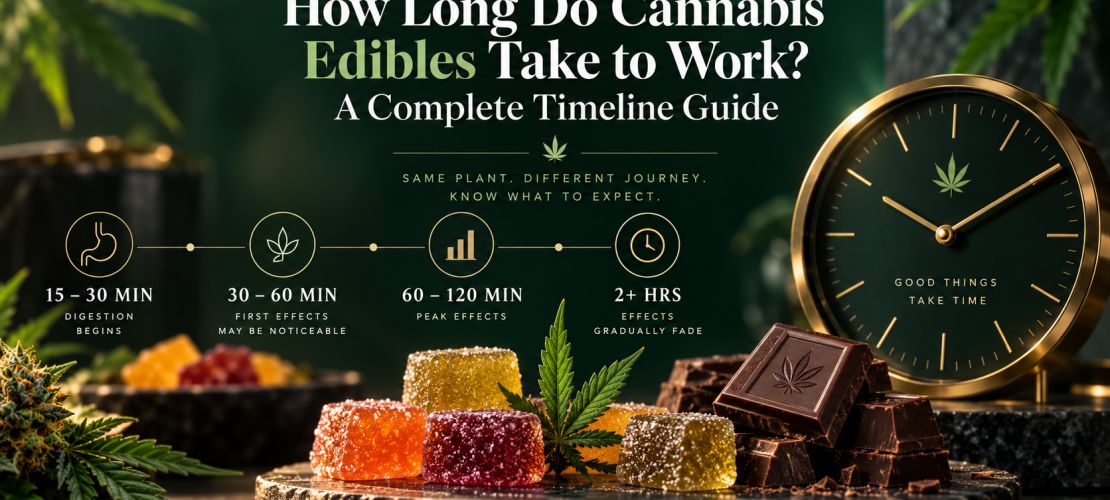
Most cannabis edibles take between 30 minutes to 2 hours to produce noticeable effects, with peak intensity occurring around 2 to 4 hours after consumption. This extended timeline catches many first-time users off guard, leading to the common mistake of consuming more before the initial dose has fully kicked in. The key to enjoying edibles safely lies in understanding this delay and the factors that influence it.
Why Edibles Take Longer Than Other Consumption Methods
The delayed onset of edibles comes down to basic biology. When you consume a cannabis-infused brownie or gummy, the THC must travel through your digestive system before it can affect your brain. This journey involves several steps that take time to complete.
First, the edible breaks down in your stomach alongside your regular food. From there, the cannabinoids are absorbed through the intestinal lining and enter your bloodstream. But the process doesn’t stop there—the blood carries these compounds to your liver, where THC undergoes a transformation into 11-hydroxy-THC, a metabolite that’s actually more potent and longer-lasting than regular THC.
This is fundamentally different from inhaling cannabis through smoking or vaping. When you inhale, THC enters your lungs and passes directly into your bloodstream within seconds, bypassing the digestive system entirely. This is why smoked or vaped cannabis produces effects in just 5 to 10 minutes, while edibles require significantly more patience.
The Complete Timeline: From First Bite to Peak Effects
Understanding the full timeline of edible effects helps you plan your experience and avoid overconsumption. Here’s what to expect at each stage:
Initial Onset (30 Minutes to 2 Hours)
During this window, your body is digesting the edible and processing the cannabinoids. You might not feel anything yet, and that’s completely normal. Resist the urge to consume more during this time—this is when most people make the mistake of doubling their dose, leading to an uncomfortably intense experience later.
Peak Effects (2 to 4 Hours)
This is when the edible reaches its full intensity. Your liver has converted the THC into 11-hydroxy-THC, and the concentration in your bloodstream is at its highest. The effects during this period are typically stronger and more body-centered than what you’d experience from smoking the same amount of THC.
Duration (4 to 8 Hours Total)
Edible effects are notably long-lasting, which makes them ideal for sustained relief from symptoms like chronic pain or anxiety. Most people experience noticeable effects for 4 to 6 hours, though some traces can linger for up to 8 hours depending on the dose and individual metabolism.
Factors That Influence How Quickly Edibles Work
Not everyone experiences edibles on the same timeline. Several personal and situational factors can speed up or slow down the onset time, making each experience somewhat unique.
Your Recent Meals
What you’ve eaten before taking an edible significantly impacts absorption. Taking edibles on an empty stomach typically results in faster onset—sometimes as quick as 30 to 45 minutes. However, this can also make the effects feel more intense and harder to predict. Conversely, if you’ve just finished a large meal, especially one high in fat, the edible may take longer to kick in but the effects could be stronger since THC is fat-soluble and absorbs better with dietary fats.
Your Metabolism and Body Composition
People with faster metabolisms tend to feel edibles sooner than those with slower metabolic rates. Your body weight, body fat percentage, and even sex can influence how quickly cannabinoids are processed. Generally, individuals with higher body mass may need slightly higher doses to achieve the same effects as someone smaller.
Type of Edible
Not all edibles are created equal when it comes to onset time. Products that dissolve in your mouth—like lozenges, sublingual strips, or hard candies—are absorbed through the mucous membranes and can take effect in as little as 15 to 30 minutes. Meanwhile, chewable products like gummies, chocolates, and baked goods must pass through your entire digestive system, resulting in the standard 1 to 2 hour wait time.
THC Content and Potency
Higher-potency edibles may produce more noticeable effects faster, though the digestive timeline remains relatively consistent. What changes more dramatically is the intensity rather than the speed. A 5mg edible might produce subtle effects at the 90-minute mark, while a 20mg edible taken at the same time could hit much harder at that same point.
Your Cannabis Tolerance
Regular cannabis users often have higher tolerances, meaning they need larger doses to feel the same effects. Interestingly, tolerance built up from smoking doesn’t always translate directly to edibles. Since edibles produce 11-hydroxy-THC—a different compound than what you get from smoking—even experienced smokers should start with low doses when trying edibles for the first time.
Dosing Guidelines for Safe and Enjoyable Experiences
Proper dosing is the single most important factor in having a positive edible experience. The “start low and go slow” mantra exists for good reason—edibles can be surprisingly potent, and the effects last for hours.
For complete beginners, starting with 2.5mg of THC or less is advisable. This micro-dose allows you to gauge your body’s response without risking overwhelming effects. If 2.5mg feels too subtle after a few hours, you can increase to 5mg next time. Many experienced edible users find their sweet spot between 5 to 10mg, which provides noticeable relaxation and euphoria without intensity.
Doses exceeding 20mg should be reserved for those with established tolerance and experience with edibles specifically. High doses increase the risk of uncomfortable side effects like anxiety, paranoia, extreme drowsiness, and in rare cases, nausea. Always wait at least 24 hours before taking another dose if your first experience was too intense—this gives you time to fully metabolize the cannabinoids and reassess your ideal dosage.
When reading product labels, pay close attention to whether the listed THC content refers to the entire package or a single serving. A package containing 100mg might actually contain 10 individual 10mg gummies. With homemade edibles or products like brownies, you may need to cut the item into portions to achieve your desired dose.
Unique Angles: What Competitors Don’t Tell You
The First-Pass Metabolism Effect
One fascinating aspect rarely discussed is the “first-pass metabolism” phenomenon. When THC passes through your liver, a significant portion is actually metabolized before it ever reaches your brain. This is why eating 10mg of THC feels different than inhaling 10mg—much of that oral dose is filtered out during digestion. Some research suggests that only 10-20% of orally consumed THC actually makes it into your bloodstream, compared to 50-60% when inhaled. This explains why edible dosing seems disproportionately higher than smoking equivalents.
The Role of Your Gut Microbiome
Emerging research suggests that your unique gut bacteria composition may influence how you process cannabis edibles. People with certain bacterial profiles may metabolize THC more efficiently, leading to faster onset and stronger effects. This could explain why two people of similar size and tolerance can have vastly different experiences from the same edible. While research is still early, this points to why personalized experimentation with dosing is so important.
CBD’s Modulating Effect
If you’ve overconsumed and are feeling uncomfortably high, taking CBD can help moderate the intensity. CBD doesn’t eliminate THC from your system, but it can counteract some of the anxiety and paranoia associated with too much THC. Keeping a CBD tincture on hand when experimenting with edibles provides a safety net that can make the experience more manageable. Products with balanced THC:CBD ratios (like 1:1) tend to produce gentler, more controlled effects that are ideal for beginners.
Tips for First-Time Edible Users
If you’re trying edibles for the first time, setting yourself up for success makes all the difference. Choose a day when you have no responsibilities or commitments for at least 8 hours. Being in a comfortable, familiar environment—like your home—reduces anxiety and allows you to fully relax into the experience.
Have snacks and water readily available. Staying hydrated helps with any potential dry mouth, and having regular (non-infused) food on hand can provide comfort if effects feel too intense. Some people find that eating regular food helps them feel more grounded during the peak.
Consider having a trusted friend present, especially for your first experience. Having someone who’s not consuming or who has experience with edibles can provide reassurance and help if you need anything. Plus, sharing the experience often makes it more enjoyable.
Keep entertainment options ready. Queue up your favorite movies, music, or activities beforehand so you’re not trying to make decisions once effects set in. Many people enjoy creative activities, nature documentaries, or simply relaxing with good music during their edible experience.
What to Do If You’ve Taken Too Much
Despite best intentions, overconsumption happens. If you find yourself uncomfortably high from an edible, remember: you’re safe, and this will pass. No one has ever fatally overdosed on cannabis, though the experience can certainly feel unpleasant.
Find a calm, quiet space where you feel secure. Lie down if you’re feeling dizzy or nauseous. Focus on slow, deep breathing to help manage anxiety. Many people find that watching familiar, comforting TV shows or movies helps distract them and pass the time more easily.
Black pepper is an old remedy that some find helpful—smelling or chewing on a few peppercorns may help counteract THC’s effects due to the terpene beta-caryophyllene. Similarly, as mentioned earlier, CBD can help take the edge off if you have access to it.
Stay hydrated, and if you feel up to it, take a cool shower. The effects will gradually diminish over the next few hours. Try to remember this experience as a learning opportunity for better dosing next time rather than a reason to avoid edibles altogether.
Choosing Quality Edibles
The reliability of your edible experience depends heavily on product quality. Unfortunately, not all edibles are created equal—some studies have found significant discrepancies between labeled potency and actual THC content.
Purchase from licensed, reputable dispensaries that provide lab-tested products. These establishments are required to verify potency and screen for contaminants, ensuring what’s on the label matches what’s in the product. Avoid homemade edibles from unknown sources where dosing is essentially a guess.
Look for products with clear labeling that specifies THC content per serving, not just per package. Quality manufacturers will also list other cannabinoids present, ingredients, and often provide batch numbers linked to lab results you can verify online.
Consider starting with products from established brands that specialize in edibles. These companies have refined their formulations to provide consistent experiences and have reputations to maintain, making them generally more reliable than newer or lesser-known brands.
The Advantages of Choosing Edibles
Despite the learning curve, edibles offer distinct benefits that make them appealing to many cannabis users. The extended duration makes them ideal for people seeking all-day symptom relief without needing to re-dose frequently. Medical cannabis patients often prefer edibles for managing chronic pain, anxiety, or sleep issues specifically because of this long-lasting effect.
Edibles are completely discreet and produce no telltale odor, making them ideal for situations where discretion matters. You can consume them virtually anywhere without drawing attention, unlike smoking which requires ventilation and outdoor space in most settings.
For people with respiratory sensitivities or those who simply don’t want to inhale smoke or vapor, edibles provide full cannabis benefits without any impact on lung health. This makes them accessible to a wider range of users, including those with asthma or other breathing conditions.
The variety of available edibles means there’s something for every taste preference. From gummies and chocolates to beverages and baked goods, you can find products that feel like treats rather than medicine, making the consumption experience enjoyable in itself.
Frequently Asked Questions
Why do edibles take longer to work than smoking or vaping cannabis?
Edibles take longer because they must pass through your digestive system and liver before THC enters your bloodstream. When you explore vaping options, the cannabinoids absorb directly through your lungs into the bloodstream within minutes, while edibles require 30 minutes to 2 hours for digestion and liver metabolism to convert THC into the more potent 11-hydroxy-THC.
What factors affect how quickly cannabis edibles take effect?
Several factors influence edible onset time including your metabolism, body weight, whether you’ve eaten recently, the type of edible, THC content, and individual tolerance. Empty stomachs typically result in faster onset, while fatty foods consumed with edibles can enhance absorption. Your unique body chemistry and experience with cannabis also play significant roles in timing.
How long do the effects of cannabis edibles typically last?
Cannabis edible effects typically last 4-8 hours, with peak effects occurring 2-4 hours after consumption. This extended duration is significantly longer than smoking or vaping, which usually last 1-3 hours. The longer-lasting effects make edibles popular for sustained relief but require patience and careful dosing, especially for first-time users.

About the Author: Alex Calleres
Alex Calleres has been operating multiple 20,000 square foot cannabis cultivation facilities for the past several years. Before cannabis, he worked in the oil refinery industry, and has done a lot of work on airport construction projects.
See more about the author