
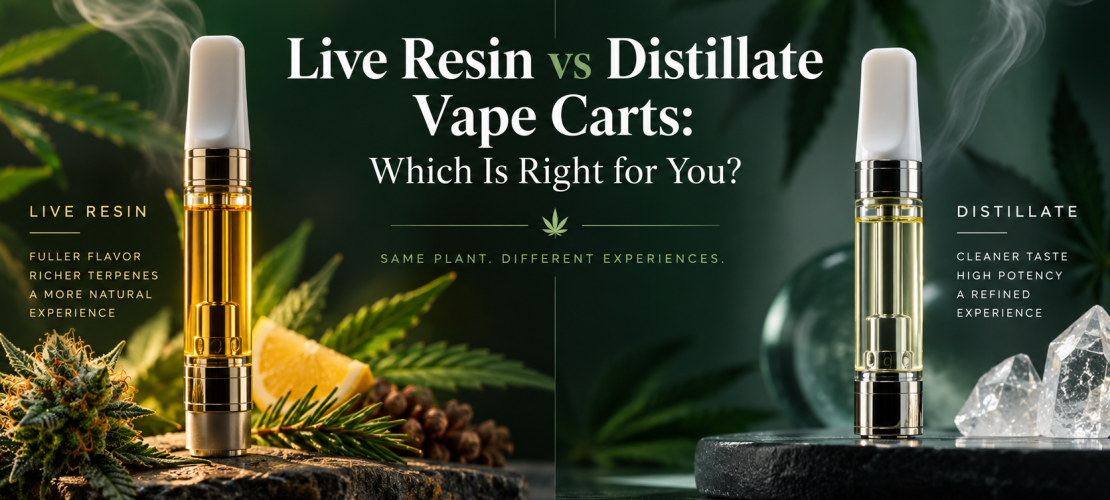
Understanding Vape Cartridge Options
Choosing between live resin and distillate vape cartridges can significantly impact your cannabis experience. Both types offer convenient, portable consumption methods, but they differ fundamentally in how they’re produced, what they contain, and the effects they deliver. Understanding these differences helps you select the ideal vape cart for your preferences and needs.
Distillate cartridges contain highly refined cannabis oil that isolates THC or CBD through multi-stage processing. This refinement strips away most terpenes, flavonoids, and other cannabinoids, leaving behind nearly pure THC—typically between 85% and 95% potency. The result is a clean, consistent product with minimal natural flavor, though manufacturers often reintroduce terpenes or add artificial flavoring afterward.
Live resin cartridges take a completely different approach. They’re extracted from fresh-frozen cannabis plants, preserving the full spectrum of natural terpenes and cannabinoids present at harvest. This process maintains the plant’s original chemical profile, delivering richer flavor, more complex aromas, and what’s known as the entourage effect—where cannabinoids and terpenes work synergistically to produce more balanced, nuanced experiences.
How Distillate Vape Carts Are Made
The production of distillate involves several precise refinement stages designed to isolate specific cannabinoids while removing almost everything else. It begins with solvent extraction, where ethanol or hydrocarbon solvents pull cannabinoids from dried cannabis plant material. This creates a crude extract containing cannabinoids along with fats, waxes, and other unwanted compounds.
Next comes winterization, a cold filtration process that removes these lipids and plant materials. The extract is chilled to sub-zero temperatures, causing fats and waxes to solidify and separate from the desired cannabinoids. After filtration, the oil undergoes decarboxylation—a heating process that activates cannabinoids by converting THCA into THC.
The final step is short-path distillation, where the oil is heated to separate compounds based on their different boiling points. This creates an extremely pure, potent concentrate with cannabinoid levels often exceeding 90%. However, this intensive refinement also removes virtually all terpenes and minor cannabinoids, leaving behind an odorless, flavorless oil that manufacturers typically enhance with added terpenes or artificial flavorings.
Who Benefits from Distillate Cartridges
Distillate vape carts appeal to several types of cannabis consumers. Budget-conscious buyers appreciate their lower price point, which typically ranges from $20 to $40 per cartridge—significantly less expensive than premium live resin options. The streamlined production process and ability to use lower-quality starting material keeps costs down.
Users with high tolerance levels often prefer distillate for its exceptional potency. The concentrated THC delivers strong, fast-acting effects that can satisfy those who need higher doses. Additionally, people seeking discretion value distillate’s minimal cannabis aroma—the refined oil produces less skunky odor than flower or full-spectrum concentrates, making it ideal for situations where you want to keep consumption private.
The consistent, predictable effects also attract consumers who prefer straightforward experiences without the variables introduced by different terpene profiles. If you’re looking for pure cannabinoid delivery without concern for authentic strain characteristics or complex flavor profiles, distillate provides exactly that.
The Live Resin Production Process
Live resin takes an entirely different approach that prioritizes preserving the cannabis plant’s natural chemical composition. The process begins immediately after harvest, when fresh cannabis plants are flash-frozen using cryogenic temperatures. This rapid freezing locks in delicate terpenes and cannabinoids that would otherwise degrade during traditional drying and curing.
Once frozen, the plant material undergoes hydrocarbon extraction using solvents like butane or propane at low temperatures. This cold extraction method protects heat-sensitive terpenes while pulling out the full spectrum of cannabinoids. The result is a concentrate that mirrors the living plant’s original profile, with terpene content typically ranging from 3% to 8%—far higher than distillate’s less than 0.5%.
Because live resin avoids the aggressive refinement stages used in distillate production, it retains minor cannabinoids like CBG, CBC, and CBN alongside THC. This preservation creates what researchers call a full-spectrum extract, containing the complex interplay of compounds found in fresh cannabis flower.
The Flavor Advantage of Live Resin
The preserved terpene profile gives live resin cartridges their signature characteristic: exceptional flavor that’s true to the original strain. When you take a pull from a live resin vape, you’re tasting the actual terpenes the plant produced—earthy, citrusy, piney, floral, or whatever notes that specific cultivar expressed naturally.
These terpenes aren’t just about taste and aroma. Research shows they influence effects too. Limonene, commonly found in citrus-forward strains, may promote energy and elevated mood. Myrcene, which gives cannabis that classic herbal smell, is associated with relaxation and sedation. Caryophyllene, with its peppery notes, may provide anti-inflammatory benefits. When you choose live resin, you’re getting these naturally occurring compounds working together as nature intended.
Contrast this with distillate cartridges, where manufacturers add back botanical terpenes (from non-cannabis sources like citrus peels or pine trees) or artificial flavorings to create taste. While this can produce enjoyable flavors—think “Strawberry Ice” or “Blue Dream”—the experience is fundamentally different from consuming the plant’s original terpene profile. Many cannabis connoisseurs describe distillate flavors as candy-like or artificial compared to live resin’s authentic, flower-forward taste.
Potency Comparison: THC Percentage vs. Overall Effects
A common misconception is that higher THC percentage always equals a stronger or better experience. While distillate cartridges typically boast impressive numbers—often 90% to 95% THC—this doesn’t tell the complete story of how the product will actually affect you.
Distillate delivers isolated cannabinoids with minimal supporting compounds. This creates a sharp, efficient high that hits quickly and intensely. For users with established tolerance or those seeking maximum THC delivery, this concentrated approach has clear appeal. However, many consumers report that distillate produces a more one-dimensional experience—strong but lacking depth or complexity.
Live resin cartridges usually contain lower THC percentages, ranging from 70% to 85%. Yet what they “sacrifice” in raw cannabinoid concentration, they gain in the entourage effect. This term describes how cannabinoids, terpenes, and other plant compounds work synergistically to produce effects greater than any single compound alone.
Understanding the Entourage Effect
Groundbreaking research published in the British Journal of Pharmacology demonstrated that cannabinoids and terpenes can produce synergistic interactions that enhance therapeutic benefits and modulate psychoactive effects. A 2023 study in Biochemical Pharmacology found that certain terpene-cannabinoid combinations increased CB1 receptor activation by 10% to 50%, directly influencing how cannabis affects your brain’s dopamine system.
In practical terms, this means live resin’s full-spectrum profile can deliver more balanced, well-rounded effects despite lower THC numbers. Many users describe the high as smoother, longer-lasting, and more nuanced—less of a sharp spike and more of a sustained, comfortable elevation. The presence of minor cannabinoids like CBG and CBC, along with diverse terpenes, creates layers of effect that isolated THC simply cannot replicate.
For consumers sensitive to THC or those who find high-potency products overwhelming, live resin’s balanced composition often provides a more manageable experience. The supporting compounds seem to soften THC’s intensity while extending and enriching its effects.
Price Differences and What You’re Paying For
One of the first things you’ll notice when comparing vape cartridges is the price gap between distillate and live resin. Live resin typically costs 20% to 40% more—a difference that reflects fundamental production differences rather than arbitrary markup.
Distillate’s affordability stems from its streamlined, efficient production process. Manufacturers can use dried cannabis, trim, or even lower-quality plant material as starting material since the refinement process strips away everything except cannabinoids anyway. The extraction and distillation equipment, while expensive initially, allows for large-scale batch production with consistent output. The resulting oil is also shelf-stable, reducing waste and storage costs.
Live resin requires premium starting material—freshly harvested, high-quality cannabis that’s immediately frozen. This preservation process demands specialized equipment and careful handling throughout extraction. The cold-temperature techniques used to protect delicate terpenes are more labor-intensive and produce smaller batches. Often, live resin comes from craft producers focused on strain-specific character rather than mass production, which adds to the cost.
Determining Value for Your Needs
Whether the price premium is justified depends entirely on what you value in your cannabis experience. If your primary goal is maximum THC delivery at the lowest cost, distillate offers unbeatable value. You’re getting concentrated cannabinoids without paying for terpene preservation or full-spectrum complexity you may not care about.
However, if flavor matters to you—if you appreciate tasting the difference between strains or want effects that feel more like consuming actual flower—the extra investment in live resin pays dividends. The richer sensory experience and more balanced effects represent meaningful quality improvements, not just superficial differences.
Many experienced cannabis consumers keep both types on hand, choosing distillate for situations where discretion and efficiency are priorities, while saving live resin for times when they want to fully appreciate their consumption experience. There’s no universally “better” option—only the right choice for your specific moment and intention.
Making Your Decision: Which Cart Type Suits You
Selecting between live resin and distillate vape cartridges requires honest assessment of your priorities, consumption patterns, and what you’re hoping to achieve. Consider these key factors when making your choice.
Choose distillate cartridges if you prioritize maximum THC potency and want the strongest possible cannabinoid concentration. They’re ideal for users with high tolerance who need substantial doses to achieve desired effects. The clean, consistent experience appeals to those who prefer predictable outcomes without variables like terpene differences between strains. Distillate also makes sense when budget is a primary concern—you can access quality vape products at more accessible price points. Finally, if you value discretion and minimal cannabis odor, distillate’s refined nature produces less noticeable aroma than full-spectrum options.
Choose live resin cartridges if authentic flavor and strain-specific character matter to your experience. The preserved terpene profile delivers tastes and aromas that closely mirror fresh cannabis flower, appealing to connoisseurs and flavor enthusiasts. Live resin is the better choice when you’re seeking the entourage effect—that synergistic interaction between cannabinoids and terpenes that creates more balanced, nuanced experiences. If you’re sensitive to high THC concentrations or find pure distillate too intense, live resin’s full-spectrum composition provides smoother, more manageable effects. Finally, users who appreciate cannabis as a craft product with terroir and varietal characteristics will find live resin’s authentic expression more satisfying.
Quality Indicators to Look For
Regardless of which type you choose, certain quality markers indicate a well-made product. Always verify that cartridges have been third-party lab tested for potency, purity, and contaminants. Reputable brands provide certificates of analysis showing cannabinoid profiles, terpene content, and confirming the absence of pesticides, heavy metals, and residual solvents.
For distillate carts, look for products that use cannabis-derived terpenes rather than botanical or artificial flavoring. While more expensive, cannabis terpenes provide more authentic flavor and may contribute to better entourage effects even in refined products. Check that the distillate is clear or light golden—dark coloring can indicate oxidation or lower quality starting material.
When selecting live resin, seek out strain-specific options rather than generic offerings. Quality producers highlight the cultivar used and its natural terpene profile. The oil should be viscous and slightly cloudy or translucent rather than completely clear—this indicates preserved plant compounds. Premium live resin often comes from single-strain batches rather than blended material, allowing you to experience that cultivar’s unique characteristics.
Additional Considerations for Vape Cart Selection
Beyond the fundamental differences between distillate and live resin, several other factors influence your vaping experience and should inform your purchasing decisions.
Hardware Quality Matters
The cartridge hardware itself significantly impacts performance regardless of oil quality. Ceramic heating elements provide superior flavor compared to cheaper wick-based systems, which can introduce burnt tastes. Adjustable airflow features allow you to customize vapor density and throat hit. Quality cartridges use glass tanks rather than plastic, preventing potential chemical leaching and preserving oil integrity.
Battery compatibility is another consideration. Most cartridges use standard 510 threading, but voltage settings on your battery affect vapor production and flavor. Lower voltage settings (2.5-3.0V) preserve terpenes and provide smoother hits ideal for live resin, while higher settings (3.5-4.0V) create larger clouds suited to distillate’s stability.
Storage and Shelf Life
Proper storage extends cartridge longevity and maintains quality. Store carts upright in cool, dark places away from direct sunlight and heat sources. Distillate’s refined nature makes it more shelf-stable, typically remaining potent for 12-18 months when stored properly. Live resin’s preserved terpenes are more volatile, with optimal quality maintained for 6-12 months before noticeable degradation occurs.
If you notice significant color darkening, separation of oil components, or diminished flavor, these indicate the product has passed its prime. While still safe to consume if properly stored, effects and taste will be compromised.
Exploring Hybrid and Specialty Options
The vape market continues evolving beyond simple distillate versus live resin distinctions. Many manufacturers now offer hybrid products that combine benefits of both approaches or introduce entirely new extraction methods.
Some premium distillate cartridges now feature cannabis-derived terpenes extracted separately and blended back in after distillation. This approach attempts to capture some of live resin’s flavor benefits while maintaining distillate’s high potency and purity. While not achieving true full-spectrum status, these enhanced distillates offer middle-ground options between the two extremes.
Live rosin cartridges represent an even higher tier than live resin for some consumers. Produced using solventless extraction through heat and pressure rather than hydrocarbon solvents, live rosin delivers exceptionally pure, flavorful oil with complete terpene preservation. However, these premium products command significantly higher prices and remain specialty items rather than mainstream options.
Strain-specific cartridges increasingly dominate both categories, with producers highlighting cultivar characteristics whether using distillate or live resin. This allows consumers to select products based on desired effects—choosing energizing sativas for daytime use or relaxing indicas for evening consumption—regardless of extraction method.
Frequently Asked Questions
What is the main difference between live resin and distillate vape carts?
Live resin vape carts are made from fresh-frozen cannabis that preserves the plant’s full terpene profile, delivering robust flavor and entourage effects. Distillate carts contain highly refined THC with most terpenes removed during processing, resulting in a cleaner, more neutral taste and consistent potency typically above 85% THC. The extraction methods, chemical composition, and resulting experiences differ fundamentally between the two types.
Are live resin vape cartridges stronger than distillate?
Distillate cartridges typically have higher THC percentages (85-95%) compared to live resin (70-85%), but live resin often produces more well-rounded effects due to its full-spectrum cannabinoid and terpene content. The entourage effect from live resin’s preserved compounds can create a more nuanced experience despite lower THC numbers. Strength isn’t just about raw potency—it’s about how all the compounds work together to affect your experience.
Which vape cart is better for flavor: live resin or distillate?
Live resin vape carts are widely considered superior for flavor because they retain the cannabis plant’s natural terpene profile from flash-freezing at harvest. Distillate has a milder, sometimes neutral taste since refin

About the Author: Alex Calleres
Alex Calleres has been operating multiple 20,000 square foot cannabis cultivation facilities for the past several years. Before cannabis, he worked in the oil refinery industry, and has done a lot of work on airport construction projects.
See more about the author